



Home - JCTD - Executive Jet Program

Executive Jet Program
Welcome to the United States Army Priority Transport Command (USAPAT) Flight Steward channel. On behalf of the Mission Support Section and the Flight Steward Team, thank you for your interest in applying to one of the Army’s most unique assignments.
USAPAT offers qualified 92Gs the opportunity to serve as Flight Stewards aboard C-37 (Gulfstream) aircraft. Our mission is to deliver safe, reliable, and first-class air transportation in support of senior leaders and mission-critical operations worldwide. Professionalism, discretion, and attention to detail are essential to our success.
The Mission
The duty of the USAPAT 92G Flight Steward is to provide the safety and comfort to the nations top military and civilian echelons, oversee the servicing of the cabin, and to prepare and serve gourmet in-flight meals.
To ensure this standard is met, we undergo training with FlightSafety International. This civilian corporate training ensures that we can recognize and identify potential in-flight emergency issues with hands on training utilizing emergency flight equipment. We also conduct “altitude chamber” training. This training is used to simulate the effects of high altitude on the human body.
We also receive MedAire in-flight Medical Management Training which includes a CPR certification by the American Heart Association. This training is received in order to treat in-flight illnesses and injuries, equipping Flight Stewards with valuable life saving techniques and the ability to recognize and stabilize medical incidents.
Lastly, we attend The Corporate School of Etiquette’s Culinary Arts Course. This training is hand on and is uniquely designed to provide the exemplary culinary skills with which are necessary to be successful in this very high visibility organization.
However, in order to better qualify for this assignment, it is recommended that you attend an Advanced Culinary Arts course. This is recommended because we are responsible for creating and preparing innovative meals for each and every mission flown. This is considered a graduate level assignment and an organization where your creativity and ingenuity are highly encouraged and welcomed with open arms.

Flight Steward Requirements
This is a nominative, competitive program for highly qualified soldiers.
- No DUIs, Letters of Reprimand, Criminal Convictions, Article 15s, nor Drug/Alcohol-related incidents *
- Secret Security clearance or higher
- Excellent Record of Evaluation Reports
- GT Score of 105 or higher *
- Current Civilian or Military Driver’s License
- Financially Sound; able to acquire and maintain Government Credit Card
- Pass the APFT and meet Army Height and Weight Standards
- Able to handle extensive TDY travel
- No Ethnic or Religious affiliations that would limit travel to foreign countries
- Pass a Class Ⅲ Flight Physical and Physiological Training (Altitude Chamber)
- No permanent Profiles that preclude lifting 50 pounds waist high
- No shaving profiles
- No more than 70 inches tall *
- Clear speaking voice without speech impediments
Items marked with asterisk (*) may be reviewed for waivers at sole discretion of USAPAT Chain of Command.
Ideal Candidates
- Exceptional, high achievers
- Culinary talent or willingness to learn
- Energetic, self-starter, motivator - a Leader!
- Able to work independently when necessary
Primary Flight Steward:
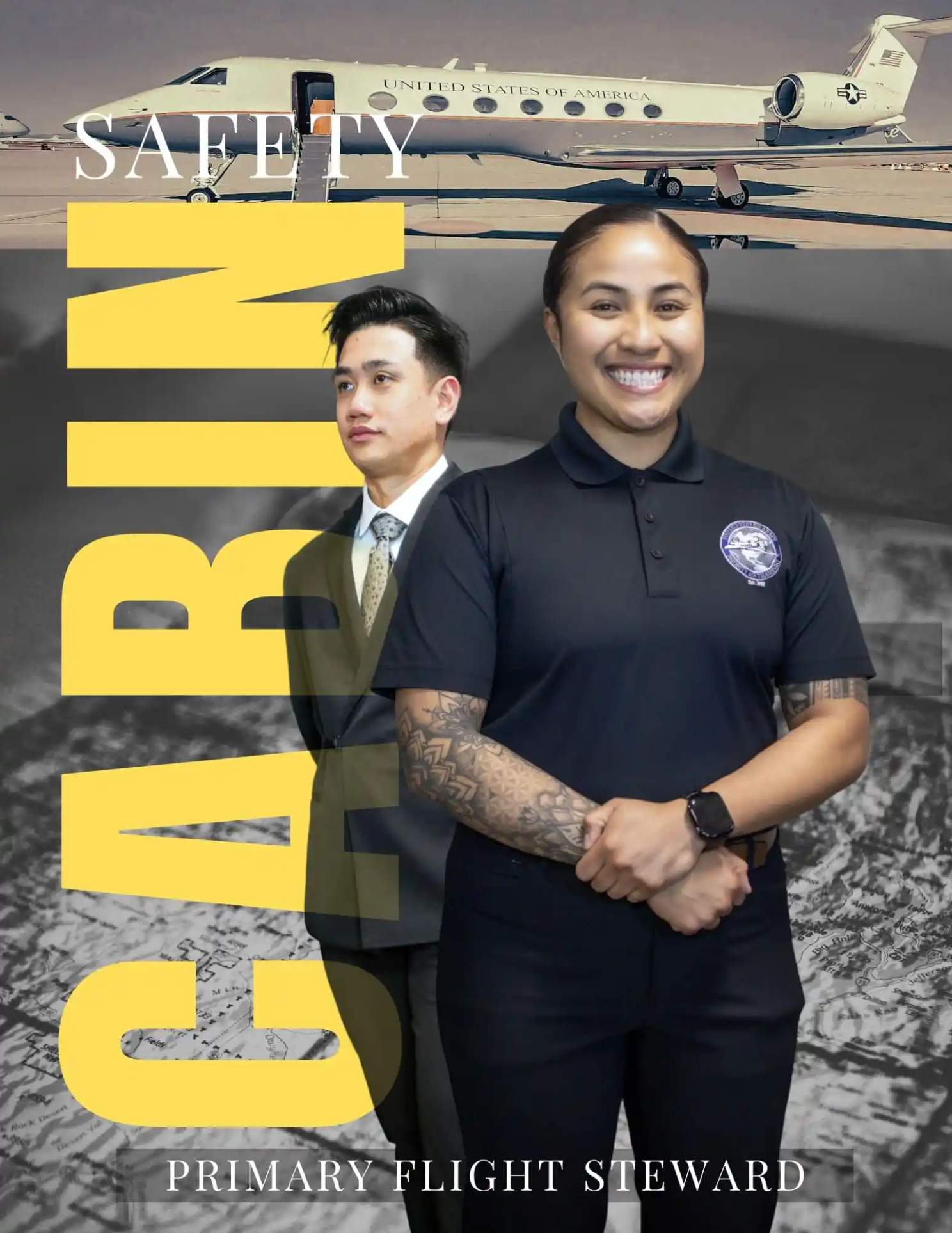
Cabin Safety
Perform duties in the cabin section of the aircraft ensuring safety and comfort, while acting as the primary evacuation facilitator for all personnel in the event of an emergency.
Training
Flight Stewards must attend training provided by FAA-approved facilities focusing on scenario-based cabin safety exercises. They are also integrated into the unit’s Aircrew Training Program to gain and maintain knowledge and proficiency in performing aircrew duties.
Secondary Flight Steward: Chef
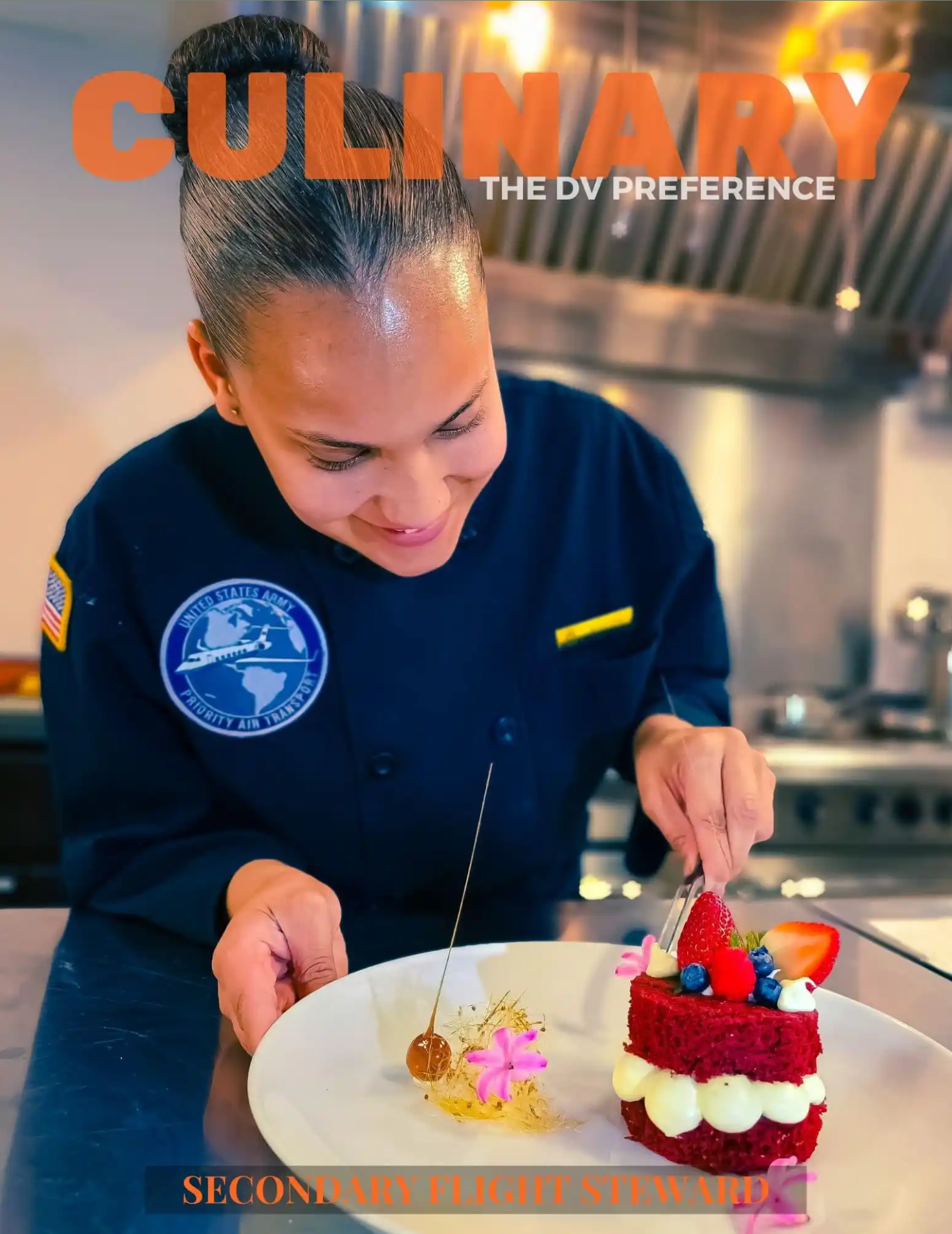
The secondary flight steward is the in-flight Chef and is responsible for providing meal and beverage services for the passengers and crewmembers. The duties also include handling and securing of luggage as well as assisting the primary flight steward on any emergency procedures.
Culinary
What sets the Army Executive Jet Program apart from counterpart branches is that culinary ingenuity is highly encouraged. Each of the assigned Chefs in flight have the artistic freedom to express and impress their customers. Creativity and skills are highlighted through their personalized menus based on the Distinguished Visitor’s dietary restrictions and preference.
Training
Each 92Gs come to USAPAT with a unique culinary skillset and knowledge forged by their own training and experience. While there is no required advanced culinary training; they will undergo a two-day serving etiquette during their Flight Safety Initial training and a five-day culinary enhancement course at DaVinci Inflight Training Institute. They will also be trained by Flight instructors on in-flight culinary applications prior to being assigned on a mission.
Join the Team
If you are a motivated NCO who is interested and meets these requirements, please send your application with the requested information to the individuals listed on the application.
Application Requirements
Packets must contain the following:
- Applicant Summary Sheet (Included in Application)
- Application
- Volunteer Statement (Included in Application)
- Privacy Act Statement (Included in Application)
- Current SRB
- ACFT Scorecard, signed by the unit 1SG, or Commander
- Letter of Recommendation (minimum of 1)
- NCOERs (last 3); if less than 3, include any NCOES 1059s
- 3 Frontal Photos (1 ASU / 1 ACU / 1 Summer APFU Uniform)
- DD Form 2992 Class Ⅲ Flight Physical (92G, 15T/U only)
The channel below serves as your primary digital resource for information regarding USAPAT, the Flight Steward mission, and the application process. Our goal is to provide transparency, guidance, and support as you prepare your application.
Applicants are encouraged to thoroughly review all tabs within this channel. A USAPAT representative will be assisting with applicant engagement and is available to help answer questions and review application packets for accuracy and completeness prior to submission. Applicants are strongly encouraged to utilize this resource to ensure their packets meet all requirements. Questions may be posted directly in this channel. I, or a member of the Standardization Team, will respond as soon as possible.
Submit Packet
The preferred method of return is to digitally fill out and sign then email the completed packet to the addresses listed on the first page of application. Email both the Battalion Command Sergeant Major and MOS-specific NCO listed. If you have any questions, please do not hesitate to email or call.
PLEASE NOTE: Processing time after our receipt of this application is at least 3-4 weeks, depending on availability of positions and number of candidates applying. An application notification will be sent to you after the review process has been completed. The DA Branch Manager has the final approval of assignment.
Frequently Asked Questions
Q: How often will I fly?
Q: Will flying be the only thing that I do?
Q: Will I have to perform details such as CQ or Staff Duty?
Q: How does PT work?
Q: Do single soldiers stay in the barracks?
Q: Will I have time to go to military schools?
Q: What are some of the additional non-military trainings that I can attend?
Flight Safety Corporate Cabin Attendant Training Course
DaVinci Culinary Experience Elite Training